
info@cngoldensea.com
+(86)15122654356
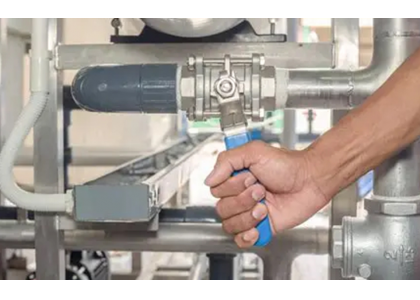
Valve marking
Most valves have an arrow on the valve body, and the direction of the arrow is the flow direction of the medium. When installing, ensure that the direction of the arrow is consistent with the actual flow direction of the medium in the pipe. For example, in a water supply line, the arrow of the valve should point in the direction of the flow, from the source end to the water end.
Some VALVES MAY ALSO BE LABELED "IN" AND "OUT". When INSTALLED, THE "IN" end is connected to the incoming water direction of the pipe, and the "OUT" end is connected to the outlet direction.
Valve Type Characteristics
Stop valve: the stem axis of the stop valve is perpendicular to the sealing surface of the valve seat, and the flow direction of the medium will change through the valve. The installation direction usually requires the medium to flow in from below the disc and out from above, so that when the valve is closed, the disc can be more closely fitted to the valve seat under the action of medium pressure to ensure sealing performance and reduce leakage.
Check valve: Check valve depends on the flow of the medium itself to automatically open and close the valve disc to prevent the medium from backflowing. Installation must be strictly in accordance with the flow of the medium, so that the medium can smoothly through the valve, and prevent its reverse flow. For example, the lift check valve should be installed on the horizontal pipe with the valve cover up; Swing CHECK VALVES CAN BE INSTALLED IN HORIZONTAL, VERTICAL or INCLINED pipelines, but when installed in vertical pipelines, the flow of media should be from bottom to top.
Safety valve: THE safety valve is used to automatically open the pressure relief when the system pressure exceeds the specified value. The installation direction should ensure that the discharged medium can be safely led to the outside or other safe places to avoid harm to the surrounding environment and equipment. Under normal circumstances, the outlet pipe of the safety valve should be as short and straight as possible to prevent the pipeline resistance from affecting the normal operation of the safety valve.
Piping system requirements
Considering the layout and process flow of the entire pipeline system, the installation direction of the valve should match the design requirements of the pipeline system to ensure that the medium can flow smoothly in the pipeline and meet the operation needs of the system. For example, in some chemical pipeline systems with specific technological processes, the installation direction of the valve needs to be based on the process requirements, so that the medium flows in accordance with the specified path and sequence to ensure the normal progress of chemical reactions or material delivery.
For piping with a slope, the valve should be installed in a direction that facilitates the removal of gas or liquid from the pipe. As in the gas pipeline, the valve installation should facilitate the flow of condensate in the gas to the low point of discharge; In the liquid pipeline, it is necessary to avoid the accumulation of gas at the height of the pipeline due to improper installation of the valve and affect the fluid delivery.
Running tests in action
After the valve installation is completed, the test run of the system is carried out. By observing the flow of the medium in the pipeline, the pressure change before and after the valve, and the working state of the valve, etc., the valve installation direction is judged to be correct. For example, if the valve is installed in the wrong direction, it may lead to abnormal medium flow, large pressure fluctuations, or the valve cannot open and close normally.
For some important or complex pipeline systems, ultrasonic flow meters, pressure sensors and other instruments can also be used to detect, accurately measure the flow and pressure of the medium, in order to verify the correctness of the valve installation direction.
Goldensea is one of the Global leading water valve suppliers and ductile iron butterfly valve manufacturers, which was established in the year 1991. The main products are butterfly valves...[ read more ]


