
info@cngoldensea.com
+(86)15122654356
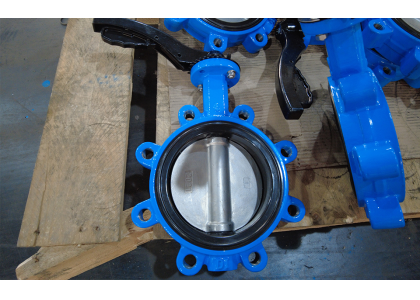
There are many types of butterfly valves, including those for quick shut-off and continuous regulation. They are mainly used in large-diameter pipelines for liquids and gases under low pressure. They are suitable for situations where pressure loss is not a critical factor, flow regulation is required, and quick opening and closing are necessary. They are typically used in conditions with temperatures below 300°C and pressures below 40 kilograms. The medium is usually water or gas, and the requirements for the medium are not high. They can also be used with granular media.
As a sealing type of butterfly valve, it has developed rapidly since the advent of synthetic rubber and is thus a new type of shut-off valve.
The media that butterfly valves can convey and control include water, condensate water, circulating water, sewage, seawater, air, gas, liquid natural gas, dry powder, slurry, fruit pulp, and mixtures with suspended solids.
Butterfly valves are suitable for flow regulation. Due to the relatively high pressure loss in the pipeline, which is approximately three times that of gate valves, when choosing a butterfly valve, the impact of pressure loss on the pipeline system should be fully considered, as well as the strength of the butterfly plate to withstand the pressure of the pipeline medium when closed. Additionally, the temperature limit that the elastic valve seat material can withstand at high temperatures must be considered. Butterfly valves have a shorter structural length and overall height, and they open and close quickly, with good fluid control characteristics. The structural principle of butterfly valves is most suitable for making large-diameter valves. When butterfly valves are used for flow control, the most important thing is to correctly select the size and type of the butterfly valve to ensure it works appropriately and effectively.
1. Generally, in throttling, regulating control, and slurry media, where a short structural length and quick opening and closing (1/4 turn) are required, and the pressure difference is low, butterfly valves are recommended.
2. Butterfly valves can be used in two-position regulation, constricted channels, low noise, cavitation and vaporization phenomena, and where there is a small amount of leakage to the atmosphere and the medium is abrasive.
3. For special working conditions such as throttling regulation, strict sealing requirements, severe wear, and low temperatures (cryogenic), special butterfly valves with metal-to-metal sealing and adjustable devices, such as triple eccentric or double eccentric butterfly valves, should be used.
4. Centerline butterfly valves are suitable for applications requiring complete sealing, zero leakage in gas tests, high service life, and working temperatures between -10°C and 150°C, such as fresh water, sewage, seawater, brine, steam, natural gas, food, medicine, oil, and various acids and alkalis in pipelines.
5. Soft-sealed eccentric butterfly valves are suitable for bidirectional opening and closing and regulation in ventilation and dust removal pipelines and are widely used in metallurgy, light industry, power, and petrochemical systems for gas pipelines and waterways.
6. Metal-to-metal line-sealed double eccentric butterfly valves are suitable for regulating and throttling in urban heating, gas supply, water supply, and other pipelines for gas, oil, acid, and alkali.
7. Metal-to-metal face-sealed triple eccentric butterfly valves, in addition to being used as program control valves in large-scale pressure swing adsorption (PSA) gas separation devices, can also be widely used in the fields of petroleum, petrochemicals, chemicals, metallurgy, and power, and are good substitutes for gate valves and globe valves.
Goldensea is one of the Global leading water valve suppliers and ductile iron butterfly valve manufacturers, which was established in the year 1991. The main products are butterfly valves...[ read more ]


