
info@cngoldensea.com
+(86)15122654356
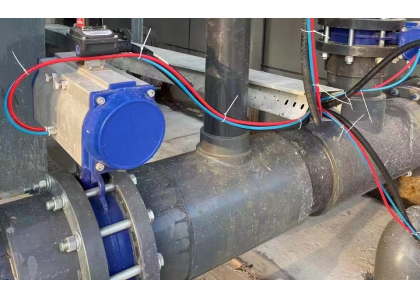
In modern industrial automation control systems, butterfly valves, as a type of valve with a simple structure and flexible operation, are widely used in water treatment, HVAC (heating, ventilation, and air conditioning), petroleum, chemical, food, and other fields. According to the different driving methods, butterfly valves are mainly divided into two categories: pneumatic butterfly valves and electric butterfly valves. Although they may look similar in appearance and can both achieve the functions of opening and closing or regulating pipeline media, there are significant differences in working principles, application scenarios, control methods, response speed, and installation and maintenance aspects. From the perspective of driving principles, pneumatic butterfly valves are driven by compressed air as the power source to drive the actuator, thereby rotating the butterfly plate to achieve the opening or closing of the valve. Their core components include pneumatic actuators (such as double-acting or single-acting cylinders), solenoid valves, positioners, air filter and pressure reducing valves, etc. When the control system sends a signal, the solenoid valve switches the air path direction, allowing compressed air to enter the cylinder's one side to push the piston to move, and then through the linkage mechanism, the butterfly plate rotates 90 degrees to complete the opening or closing action. While the electric butterfly valve is driven by electricity, it is equipped with an electric actuator (usually a motor reducer combination), which receives an electrical signal to control the motor to rotate forward or backward, thereby achieving precise regulation of the butterfly plate angle. Therefore, pneumatic butterfly valves rely on the air supply system, while electric butterfly valves rely on power supply and control systems.
In terms of response speed, pneumatic butterfly valves usually have a faster opening and closing speed. Due to the fast gas transmission speed and the sensitive response of the actuator, pneumatic butterfly valves can complete the full travel action in 12 seconds, especially suitable for situations requiring rapid cutting or emergency discharge.
In terms of control accuracy and regulation performance, electric butterfly valves have advantages. The electric actuator can be equipped with servo motors and feedback devices (such as encoders), achieving stepless speed regulation and precise positioning, supporting analog input (4-20mA) or digital communication protocols for remote automatic control, suitable for continuous regulation applications such as flow regulation and pressure control. Traditional pneumatic butterfly valves are usually two-position switch control (open/close), and if proportional regulation is required, an electrical positioner or flow amplifier needs to be added, increasing system complexity and cost. However, pneumatic regulating butterfly valves with intelligent positioners have gradually become popular, to some extent, compensating for this gap.
In terms of environmental adaptability, pneumatic butterfly valves are more suitable for high-temperature, flammable, and explosive environments. Since they do not carry electricity, they do not produce electric sparks, and belong to intrinsically safe equipment in the petrochemical, natural gas, and pharmaceutical industries, with higher safety. Many pneumatic actuators use aluminum alloy or stainless steel materials, with strong corrosion resistance, and can operate stably in harsh environments. While electric butterfly valves have built-in motors and circuit components, they have certain requirements for environmental temperature, humidity, and dust, especially in high-temperature or humid environments, where insulation aging and short circuits may occur, requiring additional protective measures to avoid affecting service life and operational reliability.
Installation and maintenance costs are also a key concern for users. Pneumatic butterfly valves require the installation of auxiliary facilities such as air compressors, air storage tanks, air source triplexes (filters, pressure reducers, oil misters), air pipelines, and solenoid valves, with a large initial investment and high requirements for air source quality (dry and clean), otherwise, it may cause cylinder jamming or seal damage. While electric butterfly valves only need to be connected to power and control signal lines to operate, wiring is relatively simple, especially in places with an existing power system, making integration easier and maintenance more convenient, only requiring regular checks of the motor, limit switches, and connection terminals. From a long-term operation perspective, the pneumatic system has lower energy consumption and may have lower operating costs than the electric system.
From the perspective of fault handling and emergency operation, electric butterfly valves usually have a manual wheel or handle, which can be manually operated in the event of power failure; The behavior of the pneumatic butterfly valve in the absence of air depends on the type of actuator: a double-acting cylinder will remain in its original position and cannot move after losing the air supply; a single-acting cylinder, on the other hand, is equipped with a spring reset device, which can automatically close or open in the event of air loss, achieving a fail-safe function. This is particularly important in certain critical processes.
Goldensea is one of the Global leading water valve suppliers and ductile iron butterfly valve manufacturers, which was established in the year 1991. The main products are butterfly valves...[ read more ]


