
info@cngoldensea.com
+(86)15122654356
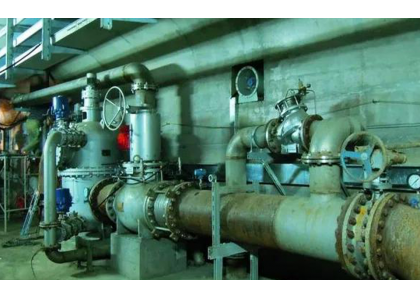
The wafer butterfly valve itself does not have a flange, and is connected by the extrusion of the pipeline flange. Generally, stud bolts are used for connection. The flanged butterfly valve itself has a flange, which is the same as the ordinary gate valve. It is considered by the majority of users as: good sealing performance, light operation, secondary corrosion, high temperature resistance, convenient operation, flexible, safe and reliable use, and has been widely used.
Flanged butterfly valves are classified by connection method:
(1) Wafer type butterfly valve: The disc of the wafer type butterfly valve is installed in the diameter direction of the pipeline. In the cylindrical passage of the valve body of the butterfly valve, the disc-shaped butterfly plate rotates around the axial direction, and the rotation angle is between 0° and 90°. When it rotates to 90°, the valve is in a fully open state. The wafer butterfly valve is simple in structure, small in size and light in weight, and only consists of a few parts. And it only needs to rotate 90° to open and close quickly, the operation is simple, and the valve has good fluid control characteristics. When the butterfly valve is in the fully open position, the pressure drop generated by the valve is very small and has good flow control characteristics. There are two types of seals: elastic seal and metal seal. Elastic sealing valve, the sealing ring can be inlaid on the valve body or attached to the periphery of the disc.
(2) Flanged butterfly valve: the flanged butterfly valve is a vertical plate structure, and the valve stem is an integral metal hard seal. The sealing ring of the valve is a composite structure of flexible graphite plate and stainless steel plate, which is installed on the valve body, and the sealing surface of the butterfly plate is Welded stainless steel. The sealing ring of the soft sealing valve is made of nitrile rubber and is installed on the butterfly plate.
Goldensea is one of the Global leading water valve suppliers and ductile iron butterfly valve manufacturers, which was established in the year 1991. The main products are butterfly valves...[ read more ]


