
info@cngoldensea.com
+(86)15122654356
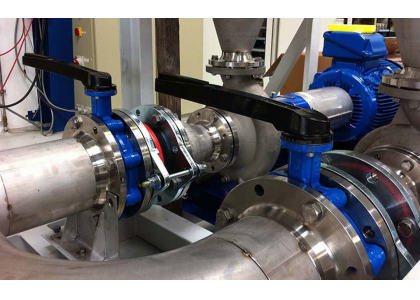
Single Eccentric Butterfly Valve
Principle and Characteristics
The design of the single eccentric butterfly valve is unique. The axis of the valve stem deviates from the center of the butterfly plate. This design ingeniously reduces the contact between the butterfly plate and the valve seat during opening, thereby reducing wear and the torque required for operation. The eccentric design reduces wear but is not suitable for high pressure and high temperature. However, due to its structural limitations, the single eccentric butterfly valve is ineffective in high-pressure and high-temperature environments.
Advantages and Disadvantages
The structure of the single eccentric butterfly valve is simple and costs less, but its sealing performance and pressure-bearing capacity are limited. It successfully improves the possible squeezing problem of the concentric butterfly valve, thereby extending the lifespan of the valve seat. Additionally, the single eccentric butterfly valve is very suitable for conventional flow regulation scenarios. However, the sealing performance of the single eccentric butterfly valve is somewhat limited, and it may leak due to scraping. At the same time, its pressure-bearing capacity is relatively low, and it is mainly suitable for low-pressure and ≤120°C low-temperature conditions.
Application Scenarios
The single eccentric butterfly valve is suitable for low-pressure and low-temperature applications, such as municipal water supply and HVAC pipelines.
Double Eccentric Butterfly Valve
Principle and Characteristics
The double eccentric butterfly valve is an optimized version based on the single eccentric butterfly valve. Its uniqueness lies in that the axis of the valve stem not only deviates from the center of the butterfly plate but also from the center of the valve body. This optimized design reduces friction and improves the temperature resistance. This design enables the butterfly plate to quickly separate from the valve seat during opening, significantly reducing excessive squeezing and scraping between the butterfly plate and the valve seat. Its sealing principle relies on the positional sealing structure, where the sealing surface between the butterfly plate and the valve seat is in line contact. This construction achieves sealing effect by the compression of the butterfly plate, so the requirements for the closing position are very strict.
Advantages and Disadvantages
The double eccentric butterfly valve has a small opening torque and a long service life, but its high-pressure sealing performance is slightly inferior to that of the triple eccentric. The double eccentric butterfly valve has many advantages, including zero friction opening and closing, very small torque, and extremely long service life. It can adapt to slightly higher pressure and temperature environments, but its high-pressure sealing performance is not as good as that of the triple eccentric butterfly valve. Scope of Application
Double eccentric butterfly valve is suitable for medium and low pressure and medium temperature environments and is widely used in industries such as sewage treatment.
Triple eccentric butterfly valve
Structure and principle
The triple eccentric butterfly valve adds a third eccentricity on the basis of the double eccentricity, achieving full metal sealing through a unique eccentric design, and is very suitable for high temperature and high pressure. Its uniqueness lies in the three eccentricities: the shaft, the valve seat, and the center line of the valve seat. This design makes the sealing section of the butterfly plate no longer present a standard circle after the third eccentricity, but becomes an ellipse, and thus the sealing surface also shows asymmetry. This design not only gives the triple eccentric butterfly valve excellent sealing performance, but also ensures that it can close tightly in high temperature and high pressure environments.
Outstanding performance and challenges
The triple eccentric butterfly valve has excellent performance, but also faces some challenges. It has excellent performance but a complex structure and high cost. The triple eccentric butterfly valve has many advantages, including zero friction opening and closing, very small torque, and extremely long service life. It can withstand high temperatures (≤600℃), high pressures (PN100 or above), and corrosive media, demonstrating excellent bidirectional sealing performance, and can even replace gate valves and globe valves.
Widely applicable
The triple eccentric butterfly valve is particularly suitable for high temperature and high pressure, as well as harsh medium conditions, such as steam, oil and gas, acids and alkalis, etc. It plays an important role in key systems such as petrochemicals, nuclear power, ships, and metallurgy.
Goldensea is one of the Global leading water valve suppliers and ductile iron butterfly valve manufacturers, which was established in the year 1991. The main products are butterfly valves...[ read more ]


